
OSINT Framework for Threats: Safeguarding Sports Integrity
The Coalition of Cyber Investigators and guest contributor, Elisar Nurmagambet, CEO and Cofounder of Tesari AI, discuss how OSINT should be considered an essential tool for sport's governing bodies and the authorities seeking to protect its integrity.
The global sports industry faces a complex threat landscape in which traditional integrity risks are compounded by cybercrime, fraud, disinformation, artificial intelligence, and transnational organized crime. Match-fixing, corruption, abuse of athletes, ticket fraud, online impersonation, and attacks on reputation now form part of a digitally connected criminal ecosystem that spans betting markets, social media, encrypted communications, and international financial networks.
As a result, Open-Source Intelligence (OSINT) should be considered an essential tool for sport's governing bodies, law enforcement, security professionals and integrity units working to protect competition and maintain public trust.
Present Threat Environment
Modern sport has great commercial value in broadcasting, sponsorship, merchandising and betting. Such opportunities are growth drivers but equally, they attract criminals looking for weak links. Football is a major target of match-fixing, and esports face integrity risks due to their rapid growth and complex betting markets. There is also growing exposure to AI-generated disinformation, deepfake media, athlete impersonation schemes, social engineering attacks, credential theft, coordinated harassment campaigns and fraudulent ticketing operations. One topical example was the hacking of French football star Kylian Mbappé's X account to promote a fraudulent token, $MBAPPE, resulting in significant financial losses for some investors.
OSINT as a Defensive Strategy
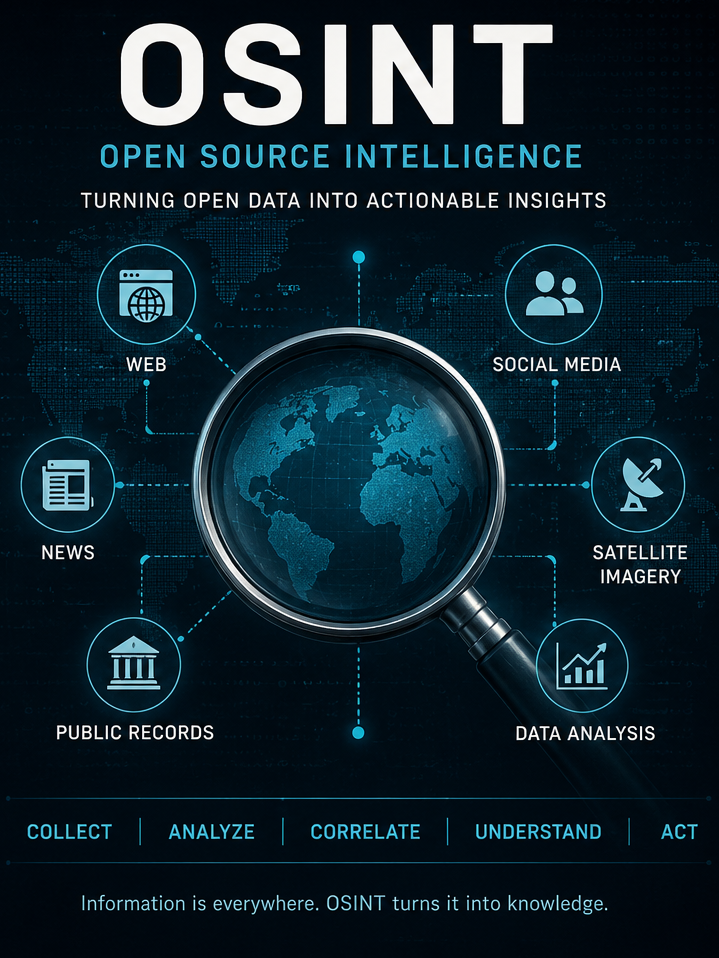
OSINT enables investigators to collect, analyze and validate information from public sources without intrusive surveillance. For example, social media, websites, public records, betting forums, domain registrations, and media reports can provide data that expose emerging risks and allow criminal trends to be identified earlier, demonstrating the real value of OSINT in connecting seemingly unrelated activities. Instances of suspicious betting, new websites, coordinated social media activity, and criminal associations may seem small individually, but when analyzed together, they can reveal criminal infrastructure and enable more timely proactive intervention.
Developing Effective OSINT Capabilities
However, organizing bodies, authorities, and investigators can build real OSINT strength by moving beyond basic search capabilities and integrating forensic-grade solutions that capture evidence and intelligence in a way that makes the output admissible in potential legal proceedings.
Specialist tools such as those provided by Forensic OSINT are known for capturing and preserving online evidence, including metadata, timestamps, and context, and for having the required evidential safeguards built in. Tesari AI provides an all-source intelligence environment that helps analysts sift through large datasets, discover relationships, and generate investigative leads, enabling investigators to rely on the integrity of their findings.
World Cup 2026: The Integrity Challenge Intensifies

The 2026 FIFA World Cup is the biggest football tournament ever staged. Security researchers and law enforcement have already observed a rise in fraudulent domains, phishing campaigns, fake hospitality packages, and cloned ticketing websites that use tournament branding.
Multilingual Intelligence and Translation Services
With 48 nations competing, the FIFA World Cup 2026 reinforces the importance of multilingual intelligence capabilities in sports integrity, security and investigations. Using certified translation services such as GAI Translate, organizations can ensure accuracy, consistency, and defensibility when dealing with multilingual evidence further emphasizing the need for forensic grade OSINT capabilities as a baseline.
CASE STUDY: Ticket Scam and Disinformation
Reports of fraud schemes targeting supporters increased significantly in the months leading up to the 2026 FIFA World Cup, investigators say. OSINT uncovered new domains using FIFA branding, host city names, and ticket-related terms. Further analysis revealed anonymous registrations, cloned website content, fake social media engagement and requests for cryptocurrency payments. Network analysis showed that many seemingly independent sites shared technical infrastructure and promotional channels. Investigators also found coordinated efforts to disseminate false information about ticket availability, travel, and access to the event. Proactive OSINT during major events is worth it and intelligence sharing between sports organizations, cybersecurity researchers and law enforcement has already aided disruption efforts and helped increase public awareness.
Legal and Ethical Issues
All OSINT activities need to comply with applicable legal and regulatory requirements. Data protection laws, including GDPR where applicable, require lawful processing, minimal data collection and proper retention controls. However, ethical issues are more than compliance alone. Vulnerable persons or minors require additional safeguards, and investigators should weigh the need for proportionate data collection against the individual's privacy expectations. The importance of maintaining public trust is equal to that of threat detection.
Potential Future Threats and Challenges
The increasing use of artificial intelligence provides opportunities and challenges for sports integrity. AI tools can accelerate data processing and pattern recognition, but adversaries are also using them to generate synthetic media, automate influence campaigns, and improve social engineering. The Coalition of Cyber Investigators has highlighted the importance of evidential integrity, verification, and human oversight in the use of AI in investigations and state that technology can be a force multiplier for analysts, but it cannot replace professional judgment, context, and thorough source validation.
Summary
Open-source intelligence has to become a key part of modern sports integrity operations. Criminal networks continue to evolve and exploit new technologies, meaning that organizations tasked with protecting sport must be equally sophisticated.
Effective OSINT programmes are a mix of technology, skilled analysts, experienced investigators, strong governance and collaboration. Investing in structured intelligence and forensic-grade evidence-based methods can help sports organizations build resilience against corruption, fraud and manipulation, while maintaining public confidence in fair competition.
Ultimately, success in safeguarding the integrity of sport depends on moving from reactive observation to proactive intelligence that helps organizers and authorities stay ahead of those seeking to undermine the game.
---