
The Ultimate OSINT Beginner's Guide for Companies Operating in Less Mature Markets.
The Coalition of Cyber Investigators discuss some of the ways that OSINT can help manage the risk of blind spots when you have operations in less mature markets.
Introduction
If your company relies on overseas operations in less mature markets, you probably live with a permanent level of anxiety.
You’ll likely sign off on reports that say things like “local partner aligned”, “community engagement complete”, and “regulatory outlook stable”, but deep down, you’re continually worried that those phrases hide uncertainty. Even worse, you know in reality, you don’t have a reliable and accessible way to find out what is really going on.
At the same time, people on the ground are swimming in information. Drivers know which roads are unsafe, and managers hear whispers about new rules that “everyone knows” are coming. Local activists argue about your factory and the way it treats the community on Facebook, and regional journalists hint that a prominent businessman, who might own one of your key third-party suppliers, is about to be indicted on corruption charges.
Most of that information never reaches you, and you’re left trying to manage risk blindfolded.
This is where open‑source intelligence, or OSINT, comes in.
OSINT techniques and workflows can help transform that messy, public, often local‑language information into something your business can use.
This OSINT beginner's guide is for you if:
- Your company relies upon assets, partners or staff in countries with weak compliance regimes and patchy data.
- You have no direct visibility of how local politics, crime, community sentiment or regulation really work.
- Your risk and strategy processes are aligned with more mature, stable, and transparent markets, so, in effect, you have forced a square peg into a round hole.
At The Coalition of Cyber Investigators, we have spent years helping companies manage the range of risks inherent in overseas operations. Below, we’ve outlined some common blind spots and explained how OSINT can help address them.

Blind Spots
1. “Trusted” Local Partners
If you operate in less mature markets, you probably rely on local partners, including distributors, Joint Venture (JV) participants, fixers, franchisees, and consultants, and include some company records, some basic adverse media checks, and maybe a reference from a local law firm or professional services consultancy. Despite feeling thin, when a deal has momentum, these types of relationships are invariably approved.
What is more difficult to determine are risk factors that traditional due diligence may not uncover, for example:
- Executive relationships with politicians and their families
- Connections to security services or militias
- Investment interests from oligarchs or criminals under investigation
- Corruption allegations that have not yet made international headlines
- Unresolved internal issues such as fraud, theft or staff retention challenges
Imagine a scenario where you wake up one morning to find your partner on a sanctions list, or splashed across local front pages, and your board demanding to know why no one saw it coming?
This is where OSINT earns its keep.
With OSINT workflows tailored to identify those issues that you silently worry about, you can, for example:
- Map absolute ownership and control using corporate registries, beneficial ownership databases and property records. Sites such as OpenCorporates or national registries often provide enough information to start connecting risk factors and linking them to your local partners.
- Scan local media and court filings for corruption cases, tax disputes, land grabs or environmental violations involving those names.
- Pull data from electoral commissions, political donation records and parliamentary declarations to see who is funding whom.
- Identify and review non-government organisations (NGO) briefings and reports from investigative journalism centres that are unlikely to ever surface in English.
You do not need a perfect global map of every connection. You only need to identify and verify enough factors to tell you when a partner is too risky, enabling your company to rethink the structure or walk away before doing so is no longer an option.
2. Local Support Is Weaker Than You Think
Does your annual community impact report really have all the information you need to hear – “we have all the permits, we consulted locally, we sponsor a school, there is no real opposition”?
In many markets, protests and blockades rarely appear out of nowhere. They tend to build in small, local spaces that your usual brand monitoring tools do not track, gaining momentum and placing you on the back foot.
However, by integrating OSINT workflows into your monitoring processes, you may collect information from local Facebook groups, WhatsApp, Telegram, or other adjacent messaging communities, online forums, networks, or union pages, and discover something entirely different. OSINT techniques may help you identify groups of protestors complaining about land grabs, online petition campaigns, videos of polluted rivers, photos of packed public meetings, or manifesto promises from local politicians promising to “deal with” your company or its suppliers. The type of information that may have never made its way onto your desk under normal circumstances could be available to you.
The goal of integrating targeted OSINT workflows into your risk operations is not to spy on communities but to help avoid sleepwalking into a confrontation or crisis you could have prevented months earlier.
3. Static Security Risk Assessments
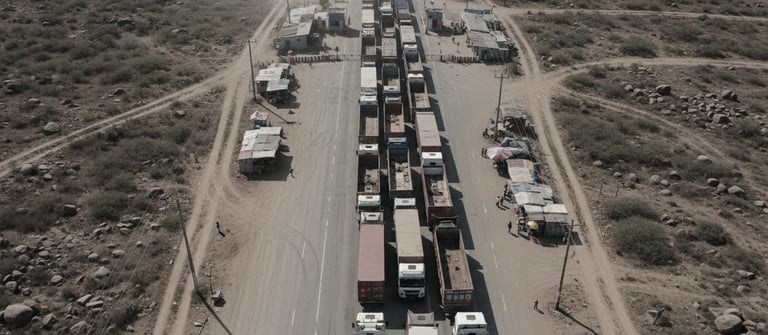
In many volatile locations, physical security tends to be managed via outdated coloured maps: red, amber, or green zones, overlaid with rules such as “no travel to red zones” or “armed escort mandatory for trips beyond 50 km”. These rules sound reassuring, but are often unreflective of the real situation on the ground.
Criminal groups change routes and tactics far faster than security controls can evolve. Local issues can quickly turn violent in previously calm towns, and a single new checkpoint can rapidly become a prolific hot spot for extortion. The main road, safe at 10 am, becomes risky at night. Locals are likely to know all this; however, intelligence of this nature may not even be collected, never mind assessed.
OSINT lets you move from a static view to a more dynamic, evidence‑based picture.
For example, you could develop workflows to:
- Examine local crime data and police incident logs, where available, and cross‑check them with local news stories about robbery, kidnapping, extortion, and cargo theft.
- Track visible gang activity and threat signals on social media.
- Follow reporting by human rights organisations such as Human Rights Watch or Amnesty International.
- Monitor information on road closures, protests, checkpoints, and curfews from local authorities, citizen reporting, community information channels, and traffic apps.
Your intelligence feeds might not be as mature or comprehensive as you would like, but if they help you steer staff away from a route that locals have been avoiding for a month, they are already worth the effort.
4. Regulatory Whispers
If you rely solely on English‑language alerts from compliance providers or international law firms to understand regulation in fragile markets, you may often only hear about changes when they are almost imminent or even worse, already live.
In many countries, the real story starts earlier. It is a compelling example of why integrating OSINT workflows into an early warning system is a sensible step.
Measures could include:
- Tracking ministerial speeches, parliamentary debates and regulatory consultations through official websites, YouTube channels and government bulletins. It’s not unusual for countries to publish far more than foreign investors actually read.
- Monitoring local business media for stories on legal actions, enforcement activity and penalties, which can help provide clues as to which sectors or issues are “in season”.
- Following local think tanks, lobby groups and trade bodies in the relevant languages to see which issues are gaining traction.
- Subscribing to legislative trackers, policy blogs, and constitutional forums such as Verfassungsblog, or regional legal blogs, can help provide early analysis of emerging issues that may previously have been invisible to you.
5. Supply Chain
Supply chain risk assessments in less mature environments must recognise that logistics operations will invariably depend on local infrastructure, not just on suppliers.
Whilst disruption is often contractually dismissed as “force majeure”, as if no one could have seen it coming, the reality is that there are usually early signals which OSINT can help detect.
Sources could include:
- Maritime data and port statistics to reveal congestion, delays and diversion patterns. Various platforms, such as MarineTraffic, track vessel movements, and some offer free tiers that can highlight emerging bottlenecks.
- Local media and civil defence reports often mention repeated blackouts, fuel shortages, road damage, and floods.
- Trade data and public procurement records may indicate if you are over‑dependent on a single supplier or corridor.
- Satellite imagery may enable you to monitor activity levels at key industrial hubs such as mines, plants and ports. Sharp drops or long queues can signal trouble is brewing.
No one expects you to run a live operations centre for every channel. You do, however, have the option to put a few realistic tripwires around the assets and routes that would really hurt you if they failed.
6. Informal Competitors and Grey Markets
If your view of the market comes only from official channel data and standard research, you will miss the part of the economy that never shows up in those sources.
In less mature markets, that part is often significant. You might have:
- Informal traders selling parallel imports out of garages and market stalls
- Counterfeiters offer lookalike products at a third of your price
- Unregistered workshops providing services that undercut your installed base
- Backdoor sales through staff or distributors who use WhatsApp as their primary channel

From HQ, revenue shortfalls are explained as “slower demand”. On the street, customers may be buying more than ever, just not from you, and not through the channels you measure.
OSINT gives you a way to see that shadow competition.
You can:
- Monitor online marketplaces, local classified sites and social platforms where grey goods are openly sold. Basic scraping and manual checks can reveal prices, volumes and locations.
- Watch consumer forums and local community pages to talk of cheaper unofficial products or alternative sources.
- Track seizures, raids and scandals around fakes or smuggling in the local press. These stories reveal routes, brands and methods. Subsequent court cases will help you develop a picture of who is involved locally.
- Cross‑check publicly available information with your suspicious data points, such as sudden drops in sales in areas where economic activity has been increasing.
7. Corruption
In many countries, local staff deal with challenges every day that you only see in policy documents. These can include:
- A demand for “facilitation” payments
- An expectation for kickbacks on both sides of a deal
- Protection money for warehouses, trucks or utilities is a permanent hidden cost
- Unofficial “fees” from inspectors, police or customs
These issues appear on an ethics slide in a training deck for compliance officers, but rarely take into account the on-the-ground realities in less mature markets.
From a local employee’s perspective, “Are you going to pay or not?” could be a direct question they face every day. This reflects the data from Transparency International which shows that in many markets, corruption remains a systemic hurdle for foreign operators.
OSINT cannot solve corruption, but it can help you understand the environment in which your people really operate.
For instance, you can:
- Monitor court cases, audit reports and investigative journalism about specific agencies, ports or offices known for extortion.
- Map politically connected “consultancies”, brokers and shell companies that seem to appear repeatedly in tenders and public deals.
- Track stories from other firms in your sector about typical demands and pain points, using local business media and industry forums.
- Combine that context with anonymous whistleblowing mechanisms and serious follow‑through, so staff feel you are not asking them to choose between their job and their safety.
The ethical and legal lines remain the same. What changes is your ability to design policies, controls and support that more precisely reflect the pressure on the ground instead of an idealised training deck version of it.
8. Local Reputation
In fragile and opaque markets, reputation tends to sit inside a wider information environment that you don’t control and often don’t have complete visibility of.
Without notice, you might find yourself woven into stories about:
- Foreign exploitation of residents
- Cultural threats by overseas companies that don’t understand how we do things
- Resource theft by multinational companies that are only interested in profit
- Espionage or regime change driven by foreign interests
Sometimes those narratives are home‑grown. Sometimes they are encouraged by political actors or foreign states, but by the time those stories hit international media, it is already too late. Damage to your reputation locally can impact staff security, customer trust, and regulatory goodwill, and all of this could surface before you even realise it.
However, OSINT can provide a way to assess the local information environment that sits one or two steps ahead of mainstream coverage.
That might mean you use OSINT tools and workflows to start:
- Tracking state media and pro‑government commentators to see how foreign firms, and especially firms from your country of origin, are framed.
- Monitoring nationalist or conspiratorial channels where themes like “foreign control”, “surveillance” or “moral decay” are discussed.
- Watching how your sector is used as a symbol in wider arguments about sovereignty, culture or inequality.
- Noticing sudden shifts in tone or volume around your country, your industry or your flagship projects.
Avoiding public outcry through communications driven solely by HQ is unlikely to succeed, but harnessing OSINT gives you a better chance of not being taken by surprise if such an issue breaks.

Making a start
In practical terms, it’s unlikely that there will be support to turn your company into an intelligence service, but to see benefits, you don’t need to build a new department or buy expensive software to know the value of OSINT.
One pragmatic way to start is by plugging OSINT workflows into existing processes. This approach turns OSINT from a separate department that gets ignored when things get busy into a capability that can help sharpen the decisions you are making right now.
Here are some examples of how to plug it into four standard business processes that are integral to most overseas operations.
1. Investment and M&A
Most deal teams are excellent at financial and legal due diligence, but often blind to "soft" local risks. Before the next Investment Committee meeting, add a mandatory OSINT summary to the pack.
Instead of just looking at the target’s balance sheet, use OSINT to help answer key questions such as:
- Who are the people behind your local partners, and what does the local-language press say about their political ties?
- Is there a history of community protest or land disputes at the target’s specific sites that didn't make the official disclosure?
- What is the target’s reputation on local employee forums and whistle-blower sites?
By adding this layer, you move from "the numbers look good" to "the numbers look good, and we’ve verified the local environment is stable enough to support them."
2. Regional Risk and Security Reviews
Security meetings that revolve around a static map of "high-risk zones" are usually outdated, since the assessment isn’t updated in real time. You can improve this quickly by shifting these reviews to a more dynamic, OSINT-led model.
This might include monitoring local social media or regional news to identify risk factors such as:
- Spikes in local-language chatter about a specific transit route
- Early reports of strikes or protests within the sector
- Changes in tone, or threats from a local governor or militia leader
3. Quarterly Business Reviews (QBRs)
When you review the performance of your interests overseas, for example, sales, margins, and staff retention, you’re often working with one-dimensional data. Analysing insights generated from OSINT can add context and help explain the "why" behind the numbers.
Imagine a scenario where sales are unexpectedly down in a specific province - you could use OSINT to answer questions, including:
- Are grey-market versions of your product being advertised on local Telegram or Facebook groups at half the price?
- Is there a coordinated "buy local" campaign or a nationalist narrative targeting your brand in that region?
- Are infrastructure failures, like power outages or port delays, trending in the local news?
4. Compliance and Ethics Audits
Local audits are often a "tick-box" exercise based on internal records and predictable responses. However, imagine the potential impact if, instead of asking local management to identify corruption issues, you designed targeted OSINT workflows to listen to what the rest of the world is saying.
This might mean analysing information including:
- Mentions of your company or local partners in local court registries and reports from investigative journalists.
- Patterns of complaints on local consumers and community forums.
- Public records of "facilitation payments" or fines involving the specific government agencies your local team interacts with.
Conclusion
The reality of operating in less mature markets is that you are already surrounded by the data you need; you just haven't had access to it or haven’t been looking for it.
By integrating OSINT workflows into existing processes, you replace blind spots with a structured early-warning system that can help protect your people, your assets, and your reputation. It helps build a more realistic, real-time map of the environment your business actually inhabits.
The next time you sit down for a regional risk review or an investment or committee meeting, ask a straightforward question: What does the local-language data say that isn't in this report?
If you don't have the answer, it is time to start looking, and we recommend integrating tailored OSINT workflows that plug directly into current operations to deliver actionable, verified insights where you need them most.